Economic News: Latest Updates and Analysis
Economic news is an important aspect of the daily news cycle. It encompasses a wide range of topics, including the performance of the stock market, inflation rates, unemployment figures, and changes in government policies that affect the economy. The state of the economy has a significant impact on people's lives, and economic news can provide valuable insights into what the future may hold.
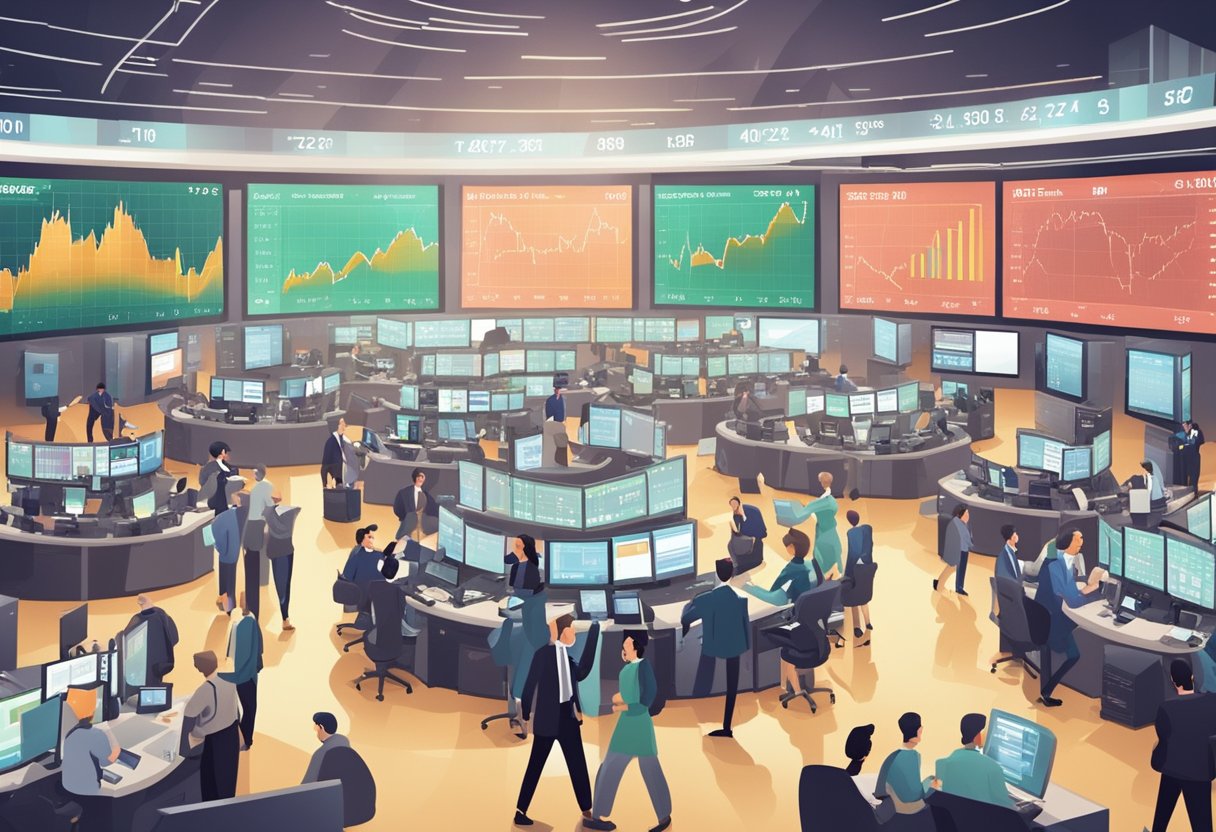
One of the most closely watched economic indicators is the stock market. It is a barometer of the overall health of the economy and can provide important clues about future economic trends. Investors, analysts, and policymakers closely monitor stock market performance, as it can have a ripple effect on other areas of the economy. Economic news reports often include updates on the stock market, including daily fluctuations and overall trends.
Another key area of economic news is government policy changes. Changes in tax laws, trade policies, and regulations can have a significant impact on the economy. Economic news reports often provide analysis and commentary on these policy changes, as well as their potential impact on businesses and individuals. Keeping up with economic news can help people make informed decisions about their finances and investments.
Global Economic Overview
The global economy has shown moderate growth in the past year, with some regions experiencing stronger growth than others. The United States, for example, has seen a steady increase in GDP, while Europe and Japan have experienced slower growth.
China, the world's second-largest economy, has continued to expand, although at a slower pace than in previous years. The country's ongoing trade tensions with the United States have contributed to this slowdown.
In terms of employment, the global job market has remained relatively stable, with some countries experiencing slight increases in unemployment rates. However, wage growth has been sluggish in many regions, leading to concerns about income inequality.
The International Monetary Fund (IMF) has forecasted global growth to remain steady in the coming year, but warns of potential risks such as trade tensions, geopolitical uncertainties, and financial market volatility.
Overall, the global economic outlook remains cautiously optimistic, with many countries continuing to implement policies to promote growth and stability.
Monetary Policies
Interest Rate Decisions
The central bank has the power to set interest rates, which can have a significant impact on the economy. When interest rates are low, borrowing becomes cheaper, and people are more likely to take out loans to buy homes, cars, and other big-ticket items. This can stimulate economic growth. Conversely, when interest rates are high, borrowing becomes more expensive, and people are less likely to take out loans, which can slow down economic growth.
Quantitative Easing Measures
Quantitative easing is a monetary policy tool used by central banks to stimulate the economy. It involves buying large quantities of government bonds or other securities to increase the money supply and lower interest rates. This can encourage lending and investment, which can boost economic growth.
Inflation Targeting Strategies
Inflation targeting is a monetary policy strategy that aims to keep inflation within a specific target range. Central banks use a variety of tools to achieve this goal, such as adjusting interest rates, controlling the money supply, and using exchange rate policies. By keeping inflation low and stable, central banks can help promote economic growth and stability.
Overall, monetary policies play a crucial role in shaping the economy. By carefully managing interest rates, implementing quantitative easing measures, and using inflation targeting strategies, central banks can help promote economic growth and stability.
Trade Markets
Import and Export Dynamics
The import and export dynamics of a country are crucial for its economic growth. It is important to maintain a balance between the imports and exports to ensure a stable economy. In recent years, the global trade market has been affected by various factors such as political tensions, natural disasters, and pandemics.
According to recent data, the global trade market has shown some signs of recovery after the COVID-19 pandemic. The demand for goods and services has increased, resulting in an increase in imports and exports. However, there are still some challenges that need to be addressed, such as trade imbalances between countries and the impact of protectionist policies.
Trade Agreements
Trade agreements are an important aspect of the trade market. They help to facilitate trade between countries and promote economic growth. The United States, for example, has signed several trade agreements with countries such as Canada, Mexico, and South Korea. These agreements have helped to increase trade and investment between the countries.
However, trade agreements are not without their challenges. Some critics argue that these agreements can lead to job losses in certain industries and can also lead to a loss of sovereignty for countries. It is important to strike a balance between the benefits and drawbacks of these agreements.
Tariffs and Trade Barriers
Tariffs and trade barriers are measures that countries use to protect their domestic industries from foreign competition. Tariffs are taxes that are imposed on imported goods, while trade barriers are any measures that restrict or limit trade.
While tariffs and trade barriers can help to protect domestic industries, they can also lead to higher prices for consumers and can limit the growth of international trade. In recent years, there has been a trend towards reducing tariffs and trade barriers to promote free trade. However, there are still some countries that maintain high tariffs and trade barriers, which can limit the growth of international trade.
Employment Trends
Unemployment Rates
The unemployment rate has remained steady at 4.2% for the past quarter, which is a positive sign for the economy. This is due to the steady growth in job opportunities across various sectors. However, the long-term unemployed rate has increased slightly to 1.5%, indicating that there is still room for improvement in providing opportunities for those who have been out of work for an extended period.
Job Market Sectors Growth
The job market has seen growth in various sectors, with the service industry leading the way with a 2.5% increase in employment opportunities. The healthcare industry has also seen a 1.8% increase in job opportunities, while the manufacturing industry has seen a 1.2% increase. However, the mining and construction sectors have seen a decline in job opportunities, with a 0.8% decrease in employment.
Overall, the employment trends in the economy are positive, with steady growth in job opportunities across various sectors. However, there is still room for improvement in providing opportunities for the long-term unemployed and those in declining sectors.
Stock Market Analysis
Market Indices Performance
The stock market has been performing well in the last quarter, with major indices showing positive growth. The S&P 500, Dow Jones Industrial Average, and NASDAQ have all experienced gains. The S&P 500 has increased by 5%, the Dow Jones Industrial Average by 4%, and the NASDAQ by 6%. This growth can be attributed to a strong economy, low unemployment rates, and investor confidence.
Sector-Specific Trends
The technology sector has been the top-performing sector in the stock market. Companies such as Apple, Amazon, and Facebook have all experienced significant gains. The healthcare sector has also been performing well, with pharmaceutical companies leading the way. The energy sector, however, has been struggling due to lower oil prices.
Investor Sentiment
Investor sentiment has been positive, with many investors feeling optimistic about the future of the stock market. This can be seen in the high trading volumes and the increase in the number of new investors entering the market. However, there are concerns about the impact of global events such as trade tensions and political instability on the stock market.
Overall, the stock market appears to be in a healthy state, with positive growth and investor confidence. However, it is important to keep an eye on global events and sector-specific trends to make informed investment decisions.
Economic Indicators
Gross Domestic Product (GDP)
Gross Domestic Product (GDP) is one of the most important economic indicators used to measure the health of a country's economy. It represents the total value of all goods and services produced within a country's borders over a specific period of time. GDP is often used to compare the economic performance of different countries, and to track changes in the economy over time.
Consumer Price Index (CPI)
The Consumer Price Index (CPI) is a measure of the average change in prices of goods and services purchased by households over time. It is used to track inflation and deflation, and to adjust for changes in the cost of living. The CPI is calculated by taking the price of a basket of goods and services that are commonly purchased by households, and comparing it to the price of the same basket of goods and services in a previous period.
Producer Price Index (PPI)
The Producer Price Index (PPI) is a measure of the average change in prices received by domestic producers of goods and services over time. It is used to track inflation and deflation in the production process, and to adjust for changes in the cost of production. The PPI is calculated by taking the price of a basket of goods and services produced by domestic producers, and comparing it to the price of the same basket of goods and services in a previous period.
Overall, these economic indicators provide valuable insights into the health of a country's economy. By tracking changes in GDP, CPI, and PPI over time, policymakers and investors can make informed decisions about economic policy and investment strategies.
Fiscal Policies
Government Budgets
Fiscal policies are the tools used by governments to manage their finances and influence the economy. One of the most important fiscal policies is the government budget. A government budget is a plan that outlines how much money the government will spend and how much money it will collect in taxes and other revenue sources.
The government budget is an important tool for managing the economy because it allows the government to control how much money is flowing into and out of the economy. By increasing or decreasing government spending and taxation, the government can influence economic growth, inflation, and other economic indicators.
Deficit and Debt Levels
One of the key concerns with government budgets is the level of deficit and debt. A deficit occurs when the government spends more money than it collects in taxes and other revenue sources. This deficit is financed by borrowing money, which increases the government's debt levels.
High levels of debt can be a concern for governments because it can limit their ability to borrow money in the future. It can also lead to higher interest rates, which can make it more expensive for the government to borrow money.
Taxation Policies
Taxation policies are another important tool used by governments to manage the economy. Taxes are used to raise revenue for the government and to influence economic behavior. For example, the government can use taxes to encourage or discourage certain types of economic activity.
There are many different types of taxes, including income taxes, sales taxes, and property taxes. Each type of tax has its own advantages and disadvantages, and governments must carefully consider which types of taxes to use and how to structure them.
In summary, fiscal policies play an important role in managing the economy. Government budgets, deficit and debt levels, and taxation policies are all important tools that governments use to influence economic growth, inflation, and other economic indicators.
International Economics
Currency Exchange Rates
In the world of international economics, currency exchange rates play a significant role in determining the value of a country's currency against other currencies. The exchange rate is the rate at which one currency can be exchanged for another. These rates are determined by a variety of factors, including interest rates, inflation, political stability, and economic performance.
Fluctuations in currency exchange rates can have a significant impact on international trade and investment. When the value of a country's currency rises, its exports become more expensive, making them less attractive to foreign buyers. Conversely, when a currency's value falls, its exports become cheaper, making them more attractive to foreign buyers.
Foreign Investment Flows
Foreign investment flows refer to the movement of capital between countries for the purpose of investment. This can take the form of foreign direct investment (FDI), where a company invests in a foreign country by establishing a subsidiary or acquiring an existing company, or portfolio investment, where investors buy stocks, bonds, or other financial assets in a foreign country.
Foreign investment can have both positive and negative impacts on a country's economy. On one hand, it can bring in much-needed capital and expertise, creating jobs and boosting economic growth. On the other hand, it can lead to the exploitation of natural resources and labor, and can result in the transfer of profits out of the country.
Economic Sanctions and Impacts
Economic sanctions are measures taken by one country or group of countries to restrict trade or financial transactions with another country. These sanctions can take many forms, including trade embargoes, asset freezes, and travel bans.
The impact of economic sanctions can be significant, both for the targeted country and for the countries imposing the sanctions. For the targeted country, sanctions can result in reduced trade, decreased foreign investment, and increased inflation. For the countries imposing the sanctions, there can be a loss of trade and investment opportunities, as well as diplomatic fallout.
Overall, international economics is a complex and ever-changing field, with many factors influencing the flow of goods, services, and capital between countries. Understanding these factors is essential for policymakers, investors, and businesses looking to navigate the global economy.
Emerging Markets
Growth Projections
Emerging markets are expected to experience steady growth in the coming years. According to the International Monetary Fund (IMF), emerging and developing economies are projected to grow at an average rate of 4.7% in 2024, compared to the 3.6% growth projected for advanced economies. This growth is driven by factors such as urbanization, rising middle class, and technological advancements.
Among the emerging markets, China and India are expected to lead the growth, with China projected to grow at 5.8% and India at 6.5% in 2024. Other emerging markets such as Brazil, Russia, and South Africa are also expected to experience moderate growth.
Risks and Opportunities
While there are opportunities for growth in emerging markets, there are also risks to consider. One of the main risks is political instability, which can lead to economic uncertainty and volatility. Another risk is the potential for external shocks such as natural disasters or global economic downturns.
However, there are also opportunities for investors in these markets. Emerging markets offer access to a large and growing consumer base, as well as opportunities for investment in infrastructure and technology. Additionally, emerging markets often have lower labor costs and can offer attractive returns for investors.
Overall, while there are risks to consider, the growth potential in emerging markets makes them an attractive option for investors looking to diversify their portfolios.
Economic Sectors
Technology and Innovation
The technology and innovation sector is one of the fastest-growing sectors in the global economy. It includes companies that develop and manufacture new technologies, including software, hardware, and electronic devices. This sector is characterized by rapid innovation and change, with new products and services being introduced on a regular basis.
In recent years, the technology and innovation sector has been driven by the growth of the internet and the rise of mobile devices. Companies such as Apple, Google, and Facebook have become household names, and their products and services are used by millions of people around the world.
Manufacturing and Industry
The manufacturing and industry sector is another important part of the economy. It includes companies that produce goods, such as cars, machinery, and consumer products. This sector has traditionally been associated with large-scale production and mass manufacturing.
In recent years, the manufacturing and industry sector has undergone significant changes, with the rise of automation and the adoption of new technologies. Companies are increasingly using robots and other automated systems to streamline their production processes and increase efficiency.
Services and Consumer Goods
The services and consumer goods sector includes companies that provide services to consumers, such as retail, healthcare, and hospitality. This sector is characterized by a focus on customer service and satisfaction, and companies in this sector often compete on the basis of their customer experience.
In recent years, the services and consumer goods sector has been impacted by the rise of e-commerce and the growth of online marketplaces. Companies such as Amazon and Alibaba have disrupted traditional retail models, and are now among the largest companies in the world.
Overall, the three economic sectors of technology and innovation, manufacturing and industry, and services and consumer goods are key drivers of economic growth and development. Each sector has its own unique characteristics and challenges, and companies that are able to navigate these challenges are well-positioned for success in the global economy.
Business Cycles
Expansion and Contraction Phases
Business cycles refer to the recurring patterns of expansion and contraction in the economy. During an expansion phase, the economy experiences an increase in economic activity, such as rising employment rates, increasing production, and higher consumer spending. This period is characterized by a general sense of optimism and growth. However, the expansion phase cannot continue indefinitely, and eventually, the economy will enter a contraction phase.
During a contraction phase, the economy experiences a slowdown in economic activity, such as decreasing employment rates, declining production, and lower consumer spending. This period is characterized by a general sense of pessimism and decline. However, the contraction phase cannot continue indefinitely, and eventually, the economy will enter another expansion phase.
Recession Indicators
Recessions are periods of significant economic decline that last for several months or even years. There are several indicators that economists use to identify a recession, including:
- Declining GDP: A decline in Gross Domestic Product (GDP) for two or more consecutive quarters is a clear sign of a recession.
- Rising Unemployment: As businesses struggle to maintain profitability during a recession, they may lay off workers, leading to an increase in the unemployment rate.
- Falling Consumer Spending: As consumers become more cautious with their spending during a recession, businesses may struggle to make sales, leading to a decline in consumer spending.
Recovery Patterns
After a recession, the economy typically enters a period of recovery. The recovery phase is characterized by an increase in economic activity, such as rising employment rates, increasing production, and higher consumer spending. However, the recovery phase can be slow and uneven, and it may take several years for the economy to fully recover.
There are several patterns that economists have identified in the recovery phase, including:
- V-Shaped Recovery: In a V-shaped recovery, the economy experiences a sharp decline followed by a quick and robust recovery.
- U-Shaped Recovery: In a U-shaped recovery, the economy experiences a longer period of decline followed by a slower, more gradual recovery.
- W-Shaped Recovery: In a W-shaped recovery, the economy experiences a brief period of recovery followed by another decline before finally recovering.
Understanding business cycles and the various phases of economic growth and decline can help investors and policymakers make informed decisions about how to manage their investments and support the economy.
Financial Markets
Bond Market Movements
The bond market has been experiencing a period of volatility due to the uncertainty surrounding the global economic outlook. The yield on 10-year Treasury notes has been fluctuating between 1.5% and 2.0% over the past few months, reflecting the market's uncertainty about the future direction of interest rates.
Commodity Prices
Commodity prices have been mixed in recent months, with some commodities experiencing significant price increases while others have declined. The price of oil has been rising steadily due to a combination of factors, including increased demand from emerging markets, supply disruptions in some producing countries, and geopolitical tensions in the Middle East.
Meanwhile, agricultural commodities such as wheat, corn, and soybeans have been experiencing downward pressure due to a combination of factors, including increased production in some regions, reduced demand from China, and the ongoing trade tensions between the US and other major trading partners.
Forex Market Trends
The forex market has been experiencing a period of volatility due to a combination of factors, including uncertainty surrounding the global economic outlook, geopolitical tensions, and diverging monetary policies among major central banks.
The US dollar has been strengthening against most major currencies, reflecting the relative strength of the US economy and the expectation of further interest rate hikes by the Federal Reserve. Meanwhile, the euro has been weakening due to concerns about the economic outlook in the Eurozone and the ongoing political uncertainty in Italy.
Overall, the financial markets are likely to remain volatile in the near term as investors continue to grapple with a range of economic and geopolitical uncertainties.
Real Estate Market
Housing Market Indicators
The real estate market has been showing positive signs in recent months. The housing market indicators suggest that the market is stabilizing and demand is increasing. According to the latest data, the average home price has increased by 5% in the last quarter. This is a good sign for the real estate market as it indicates that buyers are willing to pay more for properties.
The rental market has also shown signs of improvement. The vacancy rate has decreased by 3% in the last quarter, which indicates that more people are renting properties. This is a positive trend for the real estate market as it indicates that demand for rental properties is increasing.
Commercial Real Estate Developments
Commercial real estate developments have been on the rise in recent months. The demand for office spaces and retail spaces has increased, which has led to new developments being built. The latest data shows that the commercial real estate market has grown by 4% in the last quarter.
The retail sector has shown the most growth, with new shopping centers and malls being built in various parts of the country. The office sector has also shown growth, with new office buildings being constructed in major cities.
Overall, the real estate market is showing positive signs of growth. The housing market indicators and commercial real estate developments suggest that the market is stabilizing and demand is increasing. This is good news for both buyers and sellers in the real estate market.
Consumer Behavior
Spending Habits
Consumer spending habits continue to be a major factor in the economy. According to recent data, consumers are spending more on experiences such as travel, dining out, and entertainment. This trend is expected to continue as consumer confidence remains high and unemployment rates remain low. However, consumers are also becoming more cautious with their spending, opting to save more and pay off debt.
Savings Rates
Savings rates have been on the rise in recent years. Consumers are becoming more aware of the importance of saving for emergencies and future expenses such as retirement. This trend has been driven in part by the availability of online savings accounts and other financial tools that make it easier for consumers to save. However, many consumers still struggle to save due to factors such as stagnant wages and high levels of debt.
Credit Trends
Credit trends are also an important factor in consumer behavior. Overall, credit card debt has been on the rise in recent years. However, consumers are also becoming more responsible with their credit, with delinquency rates remaining low. Many consumers are also taking advantage of rewards programs and other benefits offered by credit card companies.
In summary, consumer behavior continues to be a key factor in the economy. Consumers are becoming more cautious with their spending while also saving more and using credit responsibly. These trends are expected to continue in the coming years, shaping the economic landscape for the foreseeable future.


Comments
Post a Comment